Beyond the Cell
At the individual cell level, batteries are often judged by familiar metrics like gravimetric and volumetric energy density (Wh/kg, Wh/L). Nickel-rich lithium-ion cells can exceed 250 Wh/kg, while safer chemistries like LFP trade energy density for stability and cost. Cell format—pouch, prismatic, or cylindrical—further influences how efficiently energy can be packaged.
But electric vehicles are not powered by one or two cells. They are powered by the entire battery system.
Once cells are integrated into modules and packs—alongside structure, cooling, electronics, and safety hardware—much of the theoretical advantage implied by cell-level metrics is diluted. Studies demonstrate that improvements in cell Wh/kg translate into disproportionately smaller gains at the pack level, as non-cell materials consume a growing share of mass and volume. [1]
This gap between component-level performance and system-level outcomes is not just a technical detail. It increasingly determines which companies—and which countries—are able to build competitive electric vehicles at scale.
What does this mean beyond the technology?
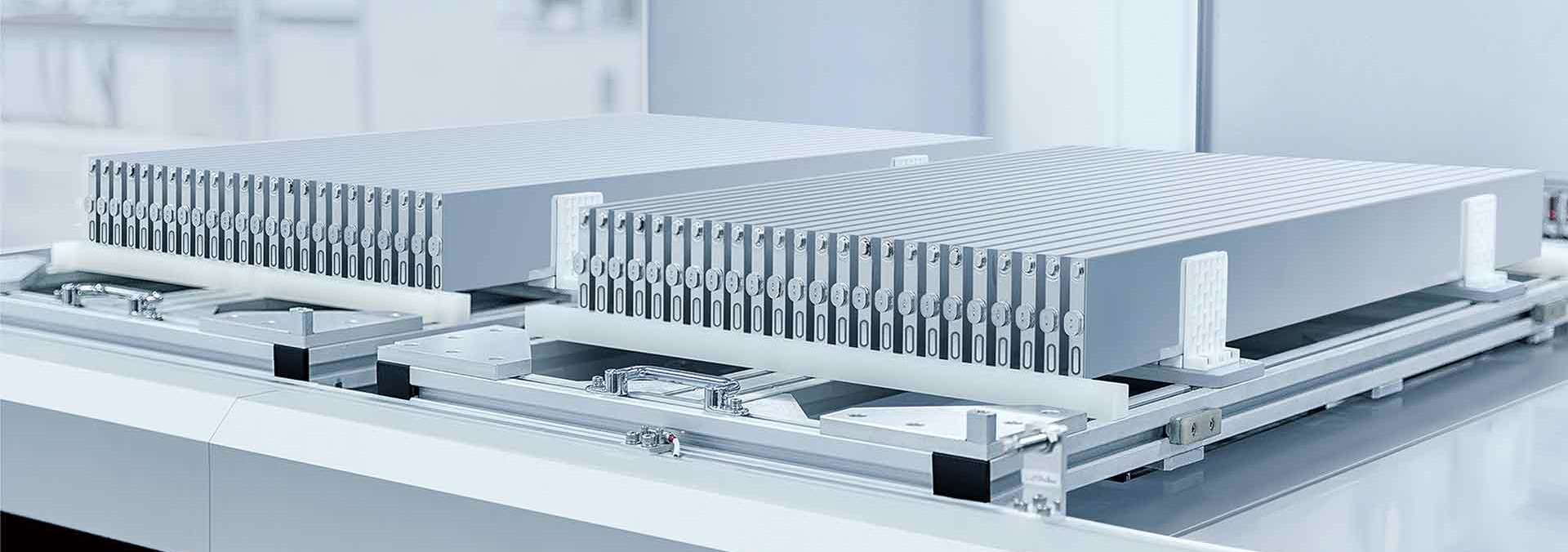
The debate around cell-level versus system-level efficiency has implications well beyond battery engineering. At a global level, it increasingly shapes the competitive dynamics between China and the West—and that competition is fundamentally a race against time and value.
Western automakers and battery startups are largely pursuing a technology-led strategy - mostly staying on the sidelines for mass cell production.[3] [4] Solid-state batteries, lithium-metal anodes, and novel electrolytes promise step-change improvements at the cell level, but most remain in early or mid-stage commercialization. The bet is that a sufficiently large cell-level breakthroughs will overtake existing lithium-ion technology and become the dominant battery technology. If the rate of integration efficiencies and optimization occur rapidly in the short-term, the step-change improvements of the newer technologies will be dwarfed. Couple that with higher costs of these novel technologies and adoption will start in niche (high-end) markets and slowly trickle into other applications with time as we run down the curve.
China, by contrast, is pursuing a systems-led strategy—and it compounds faster. They, mostly, have relied on existing technology but have integrated it vertically across the battery stack, from cell → module → pack.
Chinese battery and EV leaders such as CATL and BYD have spent the last decade optimizing (1) cell-to-pack and cell-to-chassis architectures (2) manufacturing yield and line ramp speed and (3) supply-chain co-location and vertical integration.
These advantages do not show up in headline cell energy density numbers, but they directly translate into shorter time-to-market, lower $/kWh at the pack level, and faster iteration cycles. Standing up multi-GWh production lines quickly—and doing so repeatedly—is itself a form of system-level efficiency.
Crucially, China’s EV industry did not have to rewind a large installed base of internal-combustion manufacturing. By largely skipping the ICE phase and moving directly into large-scale EV deployment—supported by long-term industrial planning[5] and infrastructure investment—Chinese firms accumulated experience in battery systems, pack integration, and manufacturing discipline years earlier than most Western OEMs.
This headstart has created a structural asymmetry: Western companies are oft focused on future cell technology, while Chinese companies are optimizing today’s systems.
That doesn’t mean the West cannot catch up—but it does mean the window is narrow. Even if solid-state batteries deliver meaningful gains later this decade, those gains will still need to survive the same cell → pack → vehicle translation process. This problem can’t be solved in series, but needs to be parallelized - this is apparent seeing the partnerships that QuantumScape, SolidPower, and others have forged with OEMs. Meanwhile, incumbents with deep system-level expertise can absorb incremental chemistry improvements immediately and deploy them at scale. To add additional pressure, the innovation lead that the US / EU have in battery research is closing quickly.[6] If China wins on both the innovation and manufacturing fronts, the door to have some control in the EV markets will be closed.
There is also a range asymptote that should be considered. Even gas-guzzling Americans, don’t tend to need more than a 400-mile range vehicle. If a solution can be found with optimized battery system with existing cell chemistries, the newer technologies being developed by the West will have an even tougher time wedging into EV markets.
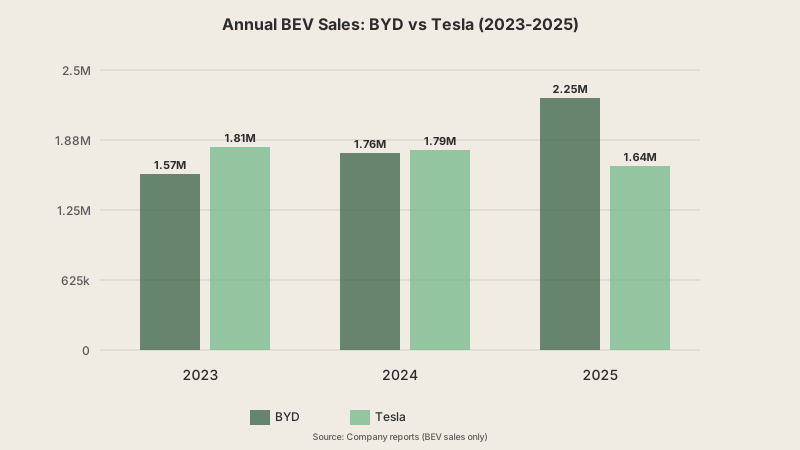
In the near to medium term, the advantage may not belong to whoever invents the best battery cell—but to whoever can turn good-enough cells into excellent vehicles faster than everyone else. This notion of vertical integration extends well past the pack - but along the battery materials and processing chain as well. And it sure looks like China is leading the way leaving the rest of the world in the rearview mirror. Once Americans see and experience what the Chinese vehicles like the Xiaomi SU7 offer, the pressure will be ratched another notch (or two) on US OEMs. [7] [8] [9] [10]
Cell formats and their trade-offs
Cell formats also influence effective energy density. Cylindrical cells (like Tesla’s 2170 or 4680) have sturdy metal cans and naturally form gaps when stacked, which compromises how tightly energy can be packed in a battery pack. Prismatic and pouch cells utilize space more efficiently – pouch cells, for instance, can achieve 90–95% packaging efficiency in volume utilization. The tradeoff is that pouch cells lack a rigid shell and may require additional support or cooling layers in the pack (offsetting some of their weight advantage).
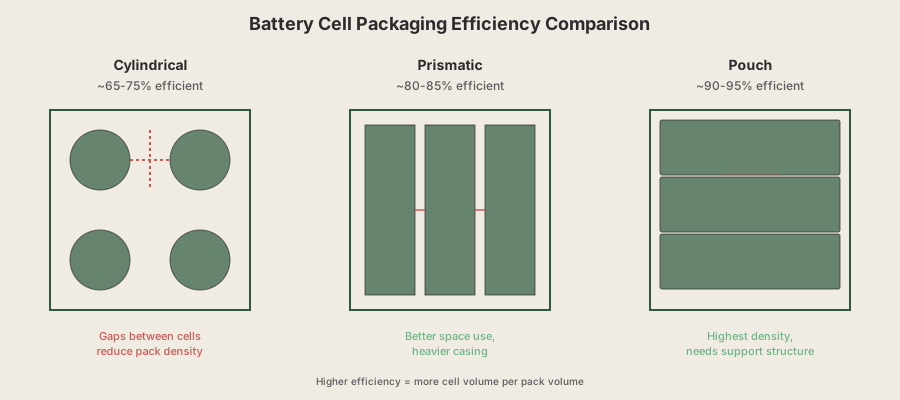
Cylindrical cells, on the other hand, offer good thermal performance (their round shape allows airflow/coolant between cells) and mechanical stability, but at the cost of lower pack-level volumetric efficiency. Prismatic cells lie in-between: they come in a large rectangular format that fills space efficiently and dissipates heat well, but each prismatic cell has a heavy casing, so cell-level Wh/kg is a bit lower.
In practice, once you build a full pack, energy densities tend to converge across cell types – one recent empirical study noted that pack-level Wh/kg is surprisingly similar for cylindrical vs. prismatic vs. pouch packs, even if cylindrical cells led at the cell level. The reason is that each format has different overheads when engineered into a pack, balancing out in the end.
Module-level considerations: packaging and interconnects
Most EV batteries are not just big collections of loose cells; cells are grouped into modules as an intermediate step. A module typically contains a set of cells in series and/or parallel, held together in a frame with electrical connections, monitoring / control boards, and often its own cooling interface. This module stage provides structural stability and safety isolation – for example, a failed cell might be contained within a module. The downside is extra weight and volume. Module enclosures, cell spacers, and wiring add “dead mass” that doesn’t store energy. As a result, a cell that is 250 Wh/kg on its own might deliver significantly less when housed in a module. Engineers thus face a packaging efficiency battle: how to secure and connect cells with minimal material overhead.
Many modern designs (e.g. BYD Blade) aim to simplify or even eliminate the module level to improve efficiency. Cell-to-pack (CTP) architecture skips the traditional modules – instead, cells are directly built into the pack structure. By cutting out module hardware, more cells (and thus energy) can fit into the same volume, boosting overall pack Wh/kg. CATL, for instance, reports that its latest generation CTP packs achieve ~10–15% higher energy density than packs using the same cells in modules. In one announcement, CATL noted its cell-to-pack design increased pack-level energy density by 15% and cut weight/cost by eliminating module components.
Tesla’s structural battery for the 4680 cells similarly does away with traditional modules – the 4680 cells act as a load-bearing structure within the pack, enabling a lighter overall assembly. The key idea is that fewer “frames within frames” means less mass that isn’t active battery, so the pack can approach the theoretical limits set by the cells themselves. A teardown analysis comparing the Blade and Tesla 4680 cells provides interesting insights into these different approaches.[12]
This reflects in a metric called the cell-to-pack ratio, which quantifies what fraction of the pack’s mass or volume is actually cells. A higher ratio means less overhead. Traditional designs with small cylindrical cells in many modules have a lower cell-to-pack ratio (more wasted space and mass), whereas large-format cells in a module-less pack drive the ratio up.
Despite these downsides, modules remain common in EVs because they simplify manufacturing and maintenance (a module can be swapped or worked on independently) and add protection. The push-pull of design is evident: OEMs want higher integration for performance, but must ensure safety and practicality. The industry trend is clearly toward fewer modules – either larger modules (“mega-modules”) or straight to cell-to-pack or even cell-to-chassis (integrating the pack with the vehicle frame) approaches.
For example, BYD’s Blade battery uses an extra-long LFP cell that effectively forms its own module, allowing a direct cell-to-pack assembly with minimal additional casing. This improves the packing efficiency so much that BYD can use a lower-Wh/kg LFP chemistry yet achieve competitive range and weight by slashing the overhead mass. In general, reducing the number of “containers within containers” in a battery pack is a prime strategy to improve gravimetric and volumetric efficiency.
Pack-level efficiency: structural needs and the cell-to-pack factor
At the pack level – the entire battery system installed in the vehicle – many factors come into play that determine the real-world efficiency and performance. The pack contains not only energy-storing cells (often 60–80% of pack mass) but also structural and support elements that ensure the battery’s safe operation over the car’s life. These include:
-
Structural components: The pack enclosure (typically an aluminum or steel tray and lid) and internal frames to secure cells/modules. These protect cells from road vibration, accidents, and provide stiffness, but add significant weight. In current EVs, the battery pack (including its structure) can account for ~25–30% of the vehicle’s weight.
-
Thermal management systems: Cooling or heating elements such as liquid coolant tubing, cooling plates between cells, fins for air cooling, thermal interface materials (gap fillers), insulation, etc. These ensure all cells stay within a safe temperature range. They are crucial for performance but are additional mass and occupy volume.
-
Electrical interconnects and BMS: Busbars or heavy-gauge wires connect cells and modules in series/parallel. Fuses and contactors provide protection. The Battery Management System (BMS) electronics, sensors on each module, and wiring harnesses monitor cell voltages and temperatures. All of these are necessary for control and safety, yet none contribute energy storage – thus they are “overhead” weight.
-
Safety and protection materials: Many packs include padding or shock-absorbing materials, fire-resistant barriers between cells or modules, vents to safely release gases in a thermal runaway event, and so on. These features mitigate hazards but often at the cost of extra mass and less compact packing of cells.
All these non-cell components reduce the pack’s overall gravimetric and volumetric energy density compared to the raw cells. A useful concept here is the gravimetric cell-to-pack factor, defined as the ratio of total cell mass to total pack mass. A well-designed pack might achieve ~70–80% cell mass fraction (meaning 20–30% of the weight is enclosures, cooling, electronics, etc.), whereas a less optimized design could be much lower.
One study found that packs using high-energy NMC cells had lower cell-to-pack factors than packs with LFP cells, because the NMC packs needed more safety and cooling components – essentially, the high-energy cells required a heavier “supporting cast”. The result was that despite NMC cells having better intrinsic Wh/kg, at the pack level their advantage nearly vanished and LFP packs showed comparable Wh/kg and Wh/L in practice. In other words, a lot of a battery’s performance is determined by pack-level engineering (how much of the pack is cells) rather than just cell chemistry.
To maximize pack-level efficiency, engineers explore multi-purpose designs where pack components serve more than one role. A notable innovation is the structural battery pack, where the battery pack is integrated into the vehicle’s chassis as a load-bearing element. Instead of a separate pack frame and separate vehicle frame, a structural pack merges them – the cells and pack casing contribute to the car’s stiffness. This can reduce overall vehicle weight (the battery mass replaces some structural chassis mass) and thus improves effective energy density at the vehicle level.
Thermal management and power delivery
Thermal management is a critical aspect of system-level efficiency that strongly impacts vehicle performance. Batteries work best in a moderate temperature range (roughly 15–45 °C). If they run too hot, internal resistance rises and the risk of degradation or thermal runaway increases. Too cold, and the battery’s power capability and charge acceptance plummet.
EV battery packs therefore include Battery Thermal Management Systems (BTMS) to keep cell temperatures balanced and in range, using cooling plates, liquid coolant circuits or fans, heaters for cold starts, and insulation. All of this adds extra mass and complexity, but it pays off by protecting performance and longevity. A recent review notes that an optimized thermal management system can boost an EV’s energy efficiency and range by up to 25% by keeping cells at ideal temperatures. In contrast, inadequate cooling will force the BMS to throttle down power output or charging current to prevent overheating.
For drivers, that means without good thermal design you might experience power fade during hard driving or slower DC fast-charge speeds in hot conditions – essentially the car can’t use the full potential of its cells because it’s constrained by thermal limits.
Power delivery (both in driving and charging) is intimately tied to thermal performance and pack design. A cell’s ability to output power (measured in kW or in terms of C-rate) must be supported by the pack’s electrical and thermal infrastructure. High power draw or fast charging generates significant heat inside cells. Packs with robust cooling (e.g. liquid-cooled packs with chillers) can sustain higher power for longer, benefiting performance-oriented driving and rapid charging. Conversely, a pack that relies on air cooling or has minimal thermal buffering might see its temperature rise quickly, prompting active limiting of power.
This is why some EVs can maintain strong acceleration for only short bursts before dialing it back, whereas others with superior thermal management (or more cell parallel capacity) can deliver repeatable performance.
The choice of cell format also influences thermal and power behavior at pack level. Cylindrical cells naturally create open channels for cooling air or fluid and tend to have good surface area for heat transfer. Pouch cells, while great for packing efficiency, have poorer thermal conductivity across the cell and can develop hot spots because the thin layers lack internal cooling pathways. Packs with pouch cells often need elaborate cooling schemes (coolant between every cell layer or heat spreaders) to manage heat during fast charge/discharge. Prismatic cells, being larger and often thinner, can dissipate heat more easily through their flat sides and often form part of the cooling structure in the pack.
Worth noting is that safer, thermally stable chemistries (like LFP or future solid-state cells) relax some thermal management needs. LFP batteries can tolerate higher temperatures before degradation, and are less prone to runaway, so they impose less stringent cooling requirements at pack level. This is one reason Tesla can now use large prismatic LFP cells in some Model 3/Y packs without active cooling on every cell – LFP’s stability provides a buffer. Higher energy NMC/NCA cells, by contrast, run hotter during use and need aggressive cooling to avoid performance loss or damage.
Safety trade-offs and their impact on pack design
EV battery packs must be designed with safety foremost in mind, and those safety measures can heavily influence efficiency metrics. A battery pack is essentially an array of energy-dense cells – under normal conditions they are benign, but if a cell overheats or is damaged, it can enter thermal runaway (a self-fueling fire/explosion risk). Automakers implement multiple layers of defense: from chemical additives in the cell that resist overheating, to mechanical safeguards in the pack that prevent a single cell failure from propagating to others.
Many of these safety features come with weight or space penalties. For example, manufacturers may add thermal barriers between cells or modules (made of ceramic fiber, intumescent material, etc.) to block fire spread – effectively inserting non-energy-bearing material that lowers volumetric density. Packs also often include robust armor and crash structures to protect the cells from impacts.
The chemistry and form factor of cells chosen has a big safety influence. LFP is chemically more stable (less heat output in abuse conditions), so an LFP pack can be engineered with less fear of thermal runaway. Empirical data shows that high-energy NMC/NCA cells tend to require more protective packaging and cooling, which lowers their pack-level energy density advantage, whereas LFP’s inherent safety means less extra mass is needed for containment.
This is also why solid-state batteries (SSB) are so anticipated: SSBs replace flammable liquid electrolyte with stable solid materials, drastically reducing fire risk. If an SSB cell is both high-performance and very safe, a pack using them could eliminate many of the safety overheads and use that space for more cells. In the interim, engineers use design tricks: e.g. segmenting the pack into isolated sections so that a thermal event in one module won’t engulf the whole pack.
Encouragingly, as cell technology improves, we see synergies between safety and efficiency: safer cells (like LFP or future cobalt-free chemistries) mean lighter packs for the same energy, because less armor and oversight is needed. As one industry piece summarized: “Safer cells yield lighter battery packs, and lighter packs yield EVs with longer range and better performance.”
Why system-level design matters to EV drivers
All the technical factors above – energy density, thermal management, interconnects, etc. – ultimately manifest in attributes that EV drivers care about - safety is a given. The system-level design of the battery (not just the cells) determines:
Driving Range: This is primarily tied to pack-level energy (total kWh) and vehicle weight. Higher gravimetric pack energy density means more kWh on board for the same mass, or a lighter car for the same kWh. Either way, the car goes farther per charge. It’s telling that most passenger EV packs today hold on the order of only ~3–5 gallons worth of gasoline energy equivalent (in kWh) – every bit of efficiency matters to stretch that limited onboard energy.
Acceleration and Power Performance: The battery pack acts as the “fuel pump” for an EV’s motors. A pack with low internal resistance and high discharge capability can deliver high power for quick 0–60 times and strong highway passing ability. Pack weight also plays a role – shedding weight improves the vehicle’s power-to-weight ratio.
Fast Charging Speed: For drivers, charging time is as crucial as range. Pack-level considerations (especially thermal management) dictate how fast the battery can safely take in power. A cell that might be capable of 3C charging in theory could be limited to 1–2C in a pack if the cooling system can’t remove heat fast enough.
Reliability & Battery Life: A well-designed pack not only performs well when new, but maintains its performance over time. System factors like uniform thermal distribution, robust BMS algorithms that keep cells at balanced states of charge, and physical reinforcement to prevent mechanical strain on cells all contribute to slower degradation.
Space and Practicality: Volumetric energy density at pack level influences how the battery fits into the car and how much room is left for passengers and cargo. A more compact pack (high Wh/L) might allow a lower floor or more cabin space.
The bottom line
System-level battery design is what bridges the gap between a cell’s textbook performance and the EV’s on-road performance. Focusing only on a cell’s Wh/kg is like looking at an engine’s theoretical horsepower without accounting for the transmission, drivetrain, and aerodynamics of the car.
EV drivers ultimately feel the result of the entire battery system working in concert. That’s why many automakers and battery companies now emphasize pack-level metrics and innovations: from Tesla’s structural 4680 packs to GM’s Ultium platform with large-format pouch cells and to startups like Our Next Energy using dual-chemistry packs – the goal is to optimize the battery as a whole for real-world use, not just chase a headline cell metric.
For consumers, this means the best EV is not necessarily the one with the “highest Wh/kg cells” but the one with the smartest battery integration. A well-designed pack can extract more usable energy, deliver higher power, and last longer from any given cell chemistry. In practical terms, that’s more miles of happy driving and a vehicle that better meets its promised performance throughout its life.
The evolution of EV batteries is increasingly about clever pack architecture, thermal innovation, and safety engineering – allying with, rather than merely relying on, advances in cell chemistry. And that is why when it comes to EV batteries, drivers should care about the pack on wheels as much as the cells inside it.
References
- MDPI Batteries. “Findings demonstrate that nickel cobalt manganese (NMC) cells show diminishing returns in energy density at the pack level due to increased safety and thermal management requirements.” 2024.
- BYD. “Blade Battery Technology.” Official BYD technology page.
- Ward’s Auto. “GM layoffs at Ultium Cells and Factory Zero highlight challenges in domestic battery cell production.”
- The Guardian. “EV battery startup Northvolt files for bankruptcy in Sweden.” March 2025.
- Wikipedia. “Five-year plans of China.” China’s strategic economic planning framework that has guided industrial development since 1953.
- New York Times. “China Is Closing In on the West’s Lead in Battery Technology.” August 2024.
- Analysis of cell-to-pack efficiency factors and system integration challenges in modern EV battery design. ScienceDirect, 2025.
- Carnegie Endowment for International Peace. “Winning the Battery Race: How the United States Can Leapfrog China to Dominate Next-Generation Battery Technologies.” October 2024.
- The Guardian. “China’s BYD overtakes Tesla as world’s biggest electric car seller.” January 2026.
- Wall Street Journal. “A Test Drive of the Xiaomi SU7 Shows Why Chinese EVs Terrify Western Automakers.” 2025.
- BYD and Tesla annual BEV sales data from company reports. Sources: Electrek, CNN Business, CNBC, Inside EVs (2023-2025).
- ScienceDirect. “Teardown analysis comparing BYD Blade Battery and Tesla 4680 cell architectures.” 2025.